Composite transfer hose for an LPG jetty
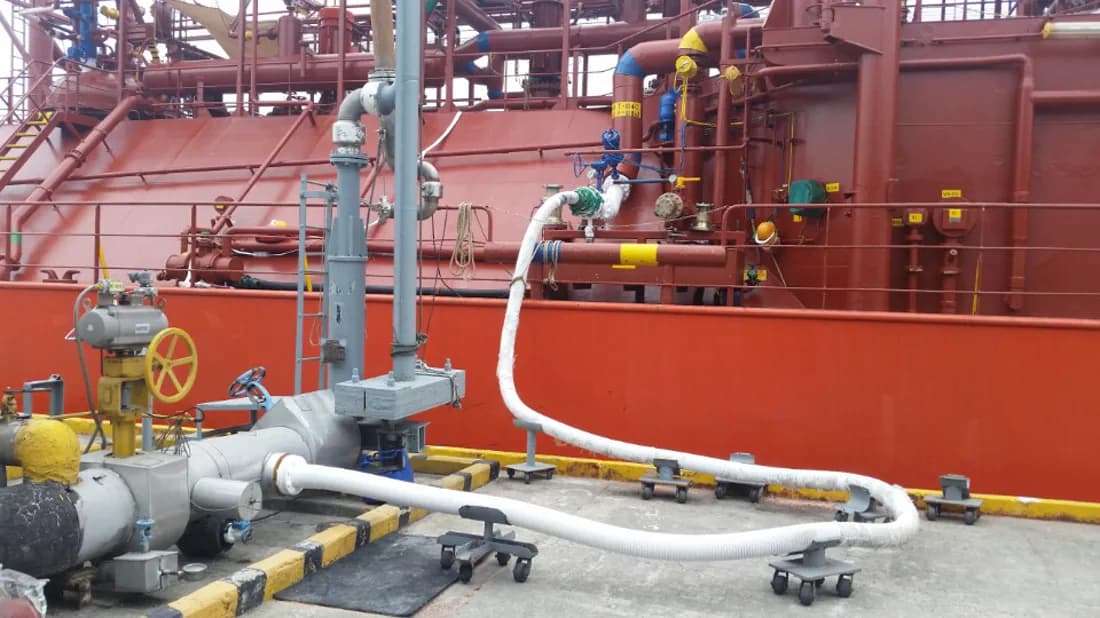
Ship-to-shore transfer hose, where the specification is as much about end fittings and periodic testing as it is about bore and pressure.
- Lingkup
- Ship-to-shore transfer hose
- Dipasok dari
- Composite Hose
Composite hose is built rather than extruded: layers of film and fabric over an inner wire, held between an inner and an outer helix. That construction is why it stays flexible at low temperature and why it fails progressively rather than suddenly, both of which matter on a jetty.
The Dolphinflex range splits by service rather than by size, so the selection work is mostly deciding which product the medium belongs to.
What went in
- Polyamide LPG hose for the pressurised product lines.
- Cryogenic hose where the scope touched LNG service, rated to −196 °C.
- Drain and vapour return hose on the same manifold, which is the part most often left off a first enquiry.
The end fittings were the long pole. They have to match the manifold already on the jetty, and a hose built to the wrong flange is a hose that gets rebuilt. The full range, with its temperature limits, is on the Composite Hose page.
Specifying transfer hose
Product, temperature, bore and length answer most of it. Tell us the end fittings and the test regime as well, because both are easier to sort before the hose is built.