Corrosion under insulation, and what changes when the blanket is aerogel
CUI is a maintenance problem before it is an insulation problem. A look at why water is the whole story, and what the Aspen blankets in the HKM catalogue actually change about it.
Corrosion under insulation is rarely discovered early. It happens in the gap between a pipe wall and the jacket around it, where nobody can see it, and it is usually found either during a turnaround or by a leak. The mechanism is simple enough to state in one sentence: water reaches the steel, sits against it at a temperature that suits corrosion, and is not allowed to dry.
That sentence is worth reading twice, because every part of it is a place to intervene. Keep the water out, and there is no CUI. Let the water out again quickly, and there is very little. Insulation choice does not change the chemistry, but it changes how much water gets in and how long it stays.
Why conventional insulation makes the problem worse
Mineral wool and calcium silicate are porous by design, because trapped air is what makes them insulate. That same porosity holds water. Once a jacket is breached, by a failed seal, a walked-on section, or a cut made for an inspection and closed badly, the insulation becomes a reservoir held against the pipe. It also has to be thick, and thickness is its own problem: more material, more weight, more scaffolding, more surface area to seal and re-seal.
The maintenance cost of that is not the insulation. It is the labour of stripping and replacing it, and the inspection time to find out whether the steel underneath is still good.
What an aerogel blanket does differently
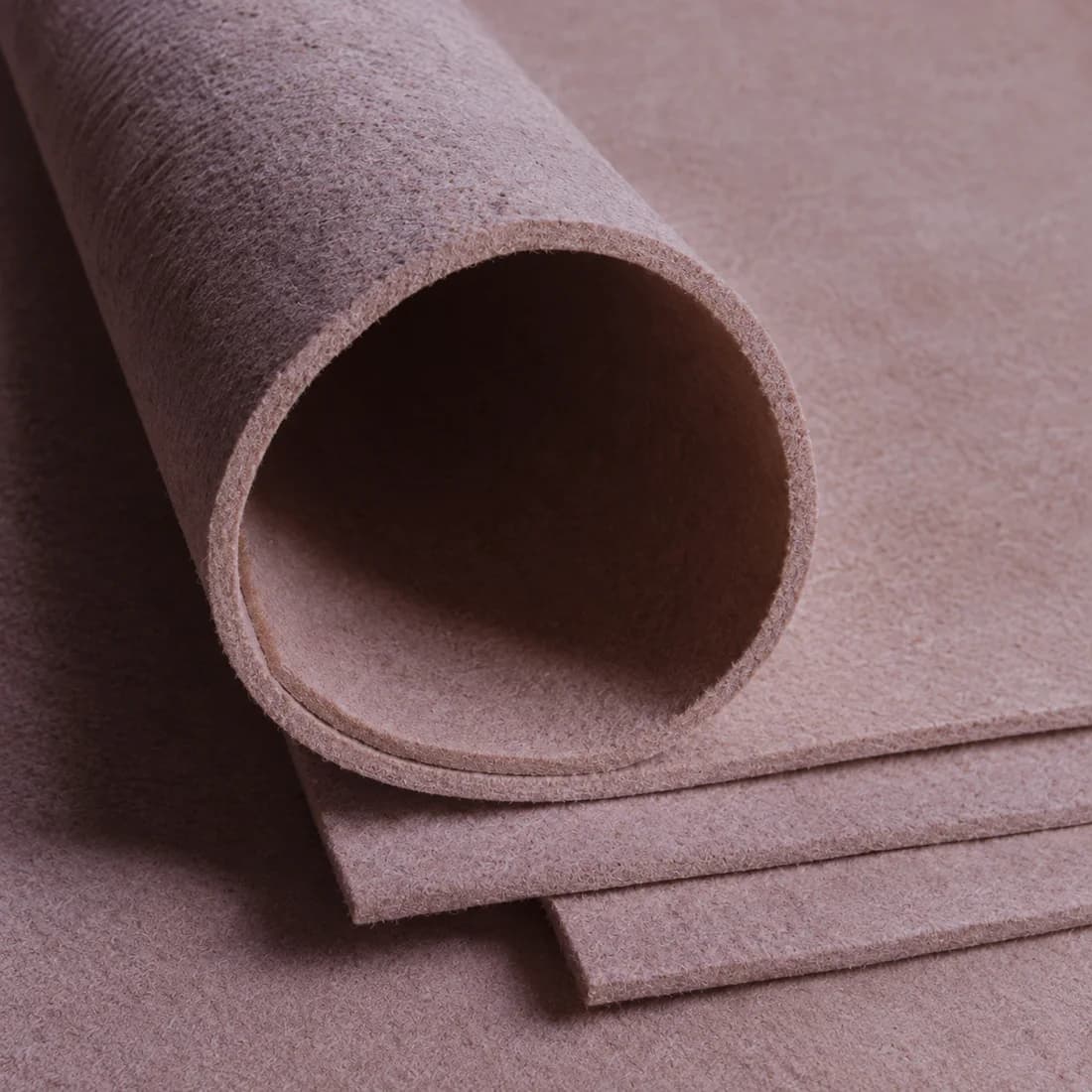
Aerogel blankets are flexible sheets of silica aerogel reinforced with a fibre batting. Two properties matter for CUI. They insulate in far less thickness than mineral wool, and they are hydrophobic, so liquid water is not held against the steel in the first place.
The three blankets in the HKM catalogue are all Aspen Aerogels products, and they split by service rather than by performance tier:
| Blanket | Max. use temperature | Density | Thickness | Intended service |
|---|---|---|---|---|
| Pyrogel® XTE | 650 °C (1200 °F) | 12.5 lb/ft³ (0.20 g/cc) | 5 mm; 10 mm | CUI service, district energy, distillation |
| Pyrogel® XTF | 650 °C (1200 °F) | 12.5 lb/ft³ (0.20 g/cc) | 10 mm | Passive fire protection, pool fire and jet fire |
| Cryogel® Z | 125 °C (257 °F) | 10 lb/ft³ (0.16 g/cc) | 5 mm; 10 mm | Sub-ambient and cold service, hydrophobic |
Figures as printed on the Aspen datasheets. See the individual product pages for the full thermal conductivity tables.
Choosing between them
The split is mostly decided for you by the service:
- Hot lines and vessels, where CUI is the concern: Pyrogel® XTE, rated to 650 °C and listed for CUI service, district energy and distillation.
- Lines that also need to survive a fire: Pyrogel® XTF, which carries the same 650 °C rating and is intended for pool fire and jet fire protection, including relief systems sized to API 521.
- Cold and sub-ambient service, where the risk is condensation rather than trapped rainwater: Cryogel® Z, rated to 125 °C and explicitly hydrophobic.
Note what the table does not say. It does not claim a thickness equivalence against mineral wool, because that depends on the temperature, the line size and the target surface temperature, and it is a calculation rather than a headline. If you send us those three numbers we will run it.
The part that is not about the material
A hydrophobic blanket does not fix a jacket that leaks. It buys tolerance: water that gets past the cladding is not held in a sponge against the pipe. Detailing still matters, and so does the discipline of closing an inspection port properly. What changes is the consequence of getting it slightly wrong, which on a plant with hundreds of penetrations is the difference that shows up in the turnaround budget.
Thinner insulation has a second-order benefit that is easy to miss on a datasheet and obvious on site: 5 mm and 10 mm blankets go around small-bore pipe, valves and elbows without custom fabrication, and one person can carry a roll. Less time on scaffolding is less exposure, and it is usually the labour rather than the material that decides whether a CUI-prone line gets re-insulated this shutdown or the next one.
Sizing an aerogel blanket for a CUI-prone line
Send us the line size, the operating temperature and whether the service is cold, hot or fire-exposed. We will come back with a thickness, a blanket and a lead time.